
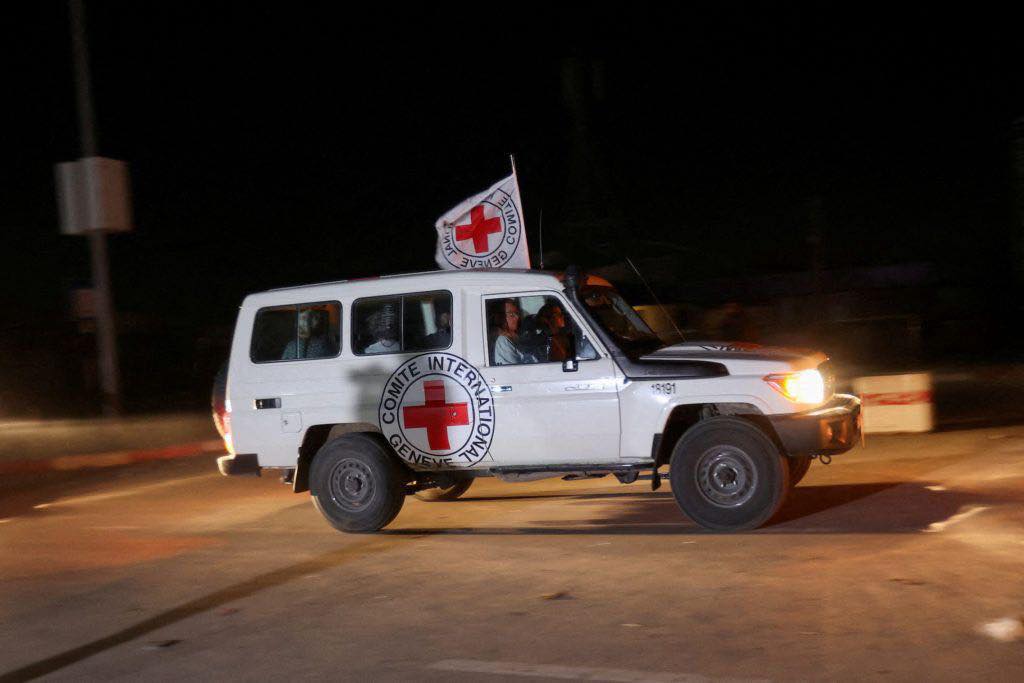
Israel and Hamas reached a historic prisoner exchange agreement last night under a framework advanced by US President Donald Trump, marking a potential turning point in Israel’s prolonged military campaign in the Gaza Strip. The deal, expected to bring 20 living hostages home within days, comes at a substantial cost: Israel will withdraw from significant portions of captured territory and release nearly 2,000 Palestinian prisoners.
The agreement is scheduled for official signing at 12:00 PM today, followed by a political-security cabinet meeting at 5:00 PM to vote on its approval. An expanded government session will convene one hour later, requiring all 38 ministers to declare their positions on the controversial arrangement. Should all approvals be secured, the release of living hostages will commence within 72 hours, potentially as early as this weekend or by Monday at the latest. Security sources indicate that the first wave of releases may occur on Saturday or Sunday, contingent upon logistical preparations on the ground.
The deal’s first phase centers on the return of living captives. Israel will receive 20 citizens currently held by Hamas who, according to intelligence assessments, remain alive. The second phase addresses the return of the fallen: 28 Israeli bodies are expected to be returned under coordinated arrangements, while nine others are classified as having unknown whereabouts. Military and security officials estimate that bodies will be returned in stages, depending on negotiation progress and the precise locations where remains are held. Each body must undergo identification and verification procedures before final repatriation to families.
From a security standpoint, Israel achieved what officials describe as a significant victory by successfully blocking Hamas’s demand to release four high-profile figures: Marwan Barghouti, Ahmad Sa’adat, Hassan Salama, and Abbas al-Sayed. These individuals, considered Hamas’s top assets, are viewed by Israeli authorities as leaders capable of orchestrating major terrorist operations. The agreement also explicitly excludes Nukhba fighters who directly participated in the October 7 invasion of Israel from any release provisions. Political establishment sources highlight that among Israel’s primary strategic gains is the Arab-Muslim pressure applied to Hamas in recent months, which may provide crucial international guarantees for implementation and potentially pave the way for the organization’s eventual removal from power and complete disarmament.
Nevertheless, the agreement requires substantial Israeli concessions. Upon completion of the hostage release, Israel will retain control of only approximately 53 percent of Gaza Strip territory, representing a withdrawal from nearly half the areas captured during months of intensive combat operations. This partial pullback from previously insisted-upon front lines has raised concerns among security officials regarding the capacity to monitor and control territories that will remain under Palestinian control. From a humanitarian and governmental perspective, Israel must release approximately 1,950 Palestinians: 250 prisoners serving life sentences for lengthy terms, and 1,700 detainees apprehended since October 7, including women and minors. These figures represent one of the largest prisoner exchanges in the history of the Israeli-Palestinian conflict.
The arrangement also establishes a ratio of one Israeli fallen soldier for 15 Palestinian bodies to be returned to their families. This provision, regarded as morally sensitive, forms part of the price Israel accepted to secure the return of its fallen for burial on home soil. Political sources suggest this element aims to generate positive momentum toward subsequent phases of the plan, during which Israel will face decisions about permitting Palestinian civilian mechanisms, potentially connected to the Palestinian Authority, to assume governance roles in Gaza, at least in administrative domains such as education, health, and public services.
The political establishment anticipates that once living hostages return, a surge of intense emotions—joy, relief, and collective catharsis—will sweep the nation. However, this moment will simultaneously trigger a complex and contentious political battle. Jerusalem officials already identify three central issues expected to dominate debate: the extent of final withdrawal from Gaza, the identity of the Palestinian entity that will govern the Strip following Hamas’s ouster, and the precise mechanisms through which Hamas will be disarmed of its weapons and military capabilities. This debate threatens to deepen internal divisions between right-wing factions advocating sustained security control and left-center elements favoring political settlement. It may also generate friction between Prime Minister Benjamin Netanyahu and President Trump, who spearheaded the framework and envisions it as a foundation for a broader regional political arrangement.
Until the ceasefire officially takes effect, the Israel Defense Forces maintains heightened alert status and continues ground operations throughout the Gaza Strip. Substantial military forces remain deployed in their positions, weapons systems remain operational, and the General Staff monitors all suspicious Hamas force movements. However, the security establishment is already preparing for the imminent signal—not merely for hostage release and homecoming, but for the opening of a new and unpredictable chapter in Israel’s longest Gaza war, a chapter that could fundamentally reshape the region’s geopolitical landscape for years ahead.
The deal represents a delicate balance between humanitarian imperatives and security considerations, crafted under intense international pressure and domestic political constraints. Its success hinges not only on technical implementation but on whether the framework can withstand the inevitable challenges that will emerge once its initial phases conclude. For families of hostages, the agreement offers hope after months of anguish and uncertainty. For Israeli society, it presents difficult questions about acceptable costs in pursuing national objectives. For the region, it may mark either a genuine pathway toward stability or merely a temporary pause in a protracted conflict with no clear resolution in sight.
As government officials prepare to cast their votes today, the weight of this decision extends far beyond immediate prisoner releases. The agreement’s ramifications will influence Israel’s security posture, its relationship with Palestinian entities, its standing with international partners, and its internal political cohesion. Whether this deal ultimately proves to be a strategic masterstroke or a costly compromise remains an open question, one that will be answered not in the coming days but in the months and years that follow.