
A ceasefire in the Gaza Strip officially went into effect at 12:00 noon Friday, ending months of warfare and setting in motion a complex agreement that includes the return of hostages held by Hamas. Israel Defense Forces completed a massive overnight withdrawal operation to new deployment lines, marking a significant turning point in the conflict while leaving key questions about the agreement’s implementation yet to be answered.
The ceasefire’s commencement triggered a 72-hour countdown, after which Hamas is expected to begin releasing the first group of hostages to Israel. According to the agreed-upon timetable, these releases are scheduled to occur Monday, a date now circled by anxious families and the broader Israeli public awaiting news of their loved ones who have been held captive for approximately one year.
The IDF Spokesperson confirmed Friday morning that forces positioned themselves at updated deployment lines in accordance with the ceasefire and hostage return agreement framework. Southern Command forces are now deployed throughout the designated area and will continue operating to eliminate any immediate threats, according to official statements. The military emphasized that while positioned at new lines, forces remain prepared to respond to security challenges along the border.
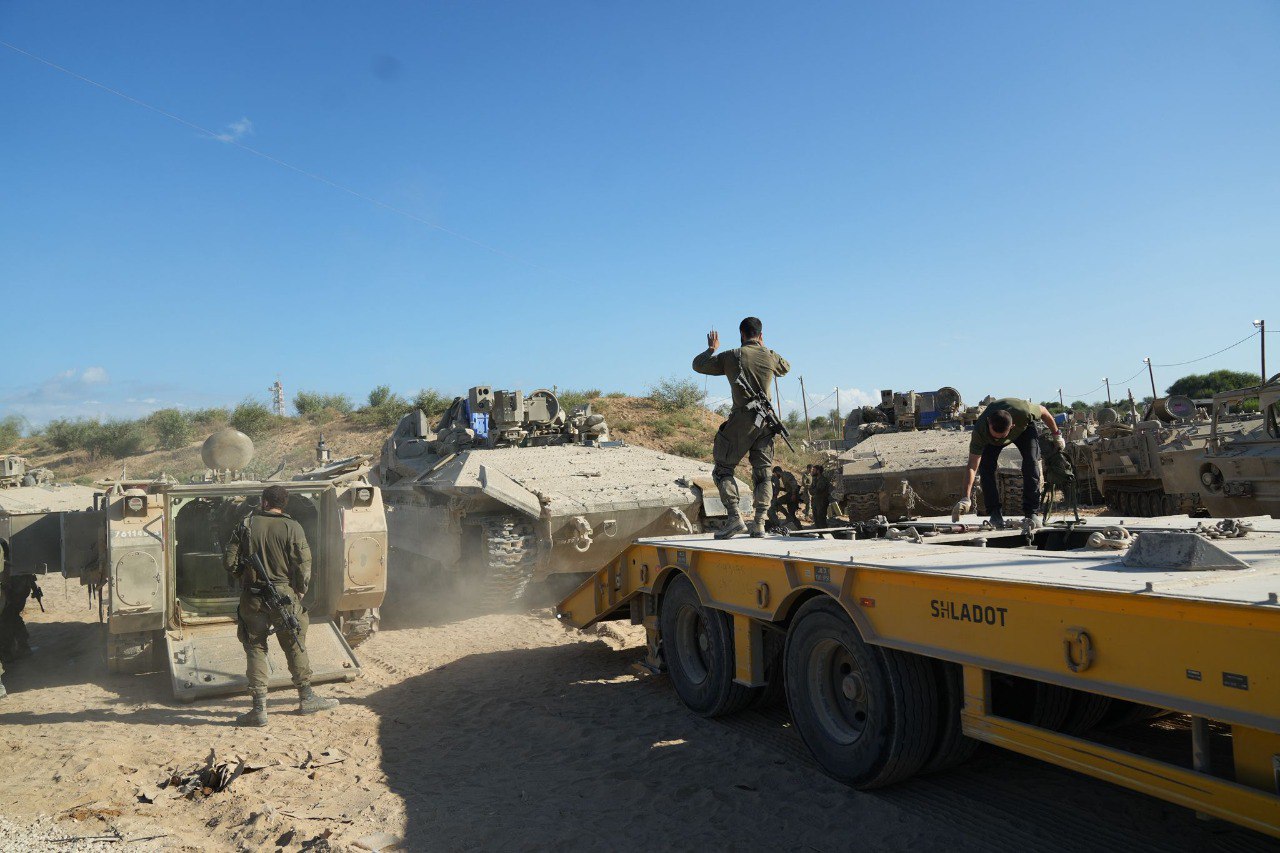
The withdrawal was preceded by what military officials describe as one of the largest logistics operations in IDF history. Throughout Thursday night, Southern Command technology and logistics personnel conducted a large-scale operation transferring forces to predetermined positions while simultaneously dismantling the extensive military infrastructure established across the Gaza Strip over the past year of fighting.
The scope of the logistics operation was extraordinary. Thousands of different types of infrastructure components were dismantled and evacuated, including industrial generators, communications antennas, soldiers’ living quarters, observation and surveillance equipment, combat positions, and various military equipment. Hundreds of trucks, bulldozers, and engineering vehicles worked through the night evacuating equipment and infrastructure from dozens of outposts and strongholds that had been established throughout the Strip during the conflict.
According to the IDF Spokesperson, technology and maintenance personnel are currently focused on increasing the readiness of technological tools and equipment while establishing appropriate infrastructure for the new defense line. The goal is ensuring forces maintain full operational capability despite the dramatic shift in deployment.
However, new details emerging from officers in Southern Command reveal potential complications regarding the precise location of IDF positions under the agreement. Testimonies indicate that at least two of the new outposts being established near the border are located further east than the yellow line appearing on maps previously published by the political echelon. The IDF, as a professional body, has not officially addressed questions about the withdrawal line, reportedly on orders from political leadership.
According to information obtained, these outposts’ adjusted locations apparently resulted from Hamas demands during negotiations. Rather than being positioned on the main north-south axis of the Gaza Strip—known as Netzarim or Salah al-Din, or by its Hebrew designation Route 17—the outposts are situated more along Route 70, closer to the Israeli border. This specifically affects the area parallel to Kibbutz Be’eri in the northern Strip, where the bisection axis known as Netzarim was located until Thursday. The shift in outpost positioning may indicate a tactical compromise required during final agreement negotiations.
The ceasefire’s arrival has generated mixed emotions among forces who fought throughout the conflict. The 188th Brigade, one of the main units that operated in the Strip, sent a message to its soldiers stating: “Time to hold our heads high with pride”. The message reflects the complexity of the moment—acknowledging both the war’s conclusion and the difficulty of withdrawing from outposts that soldiers captured and defended over the past year.
The human cost of the conflict continued until the final hours. The name of an IDF soldier who fell Thursday in northern Gaza, just one day before the ceasefire took effect, was cleared for publication Friday. Staff Sergeant Michael Mordechai Nahmani, 26, from Dimona, a technology and maintenance soldier in the 614th Combat Engineering Battalion, was killed in battle in northern Gaza on Thursday, October 9, 2025. His family received notification of his death, and he was posthumously promoted from Sergeant to Staff Sergeant. The IDF announced it shares in the family’s grief and will continue supporting them.
Nahmani’s death on the conflict’s final day underscores the heavy price paid by IDF forces even as the war drew to a close. As a technology and maintenance soldier, Nahmani was part of the logistical and operational effort enabling continued operations in the Strip and was likely involved in missions conducted in the days immediately preceding the ceasefire.
Military officials characterize the overnight logistics operation as among the most complex executed during the entire war. Evacuating thousands of items, heavy equipment, and permanent infrastructure from dozens of outposts deployed along the Strip within a compressed timeframe while maintaining operational readiness and avoiding escalation with terrorist organizations required extraordinary coordination. The operation demanded precise synchronization between combat units providing security, combat engineering units handling infrastructure dismantling, and logistics units managing transport and evacuation.
With the ceasefire now in effect, attention turns to the coming days and the critical test of the agreement’s implementation. Hamas is obligated to return the first hostages within 72 hours of the ceasefire’s commencement—by Monday. The wait for this first phase will serve as a crucial indicator of whether the entire agreement can be successfully implemented and whether the process will continue as planned.
IDF forces remain positioned along the Gaza Strip border in new strongholds within a reinforced buffer zone. According to official statements, these forces will continue operating to eliminate immediate threats and maintain security for residents in communities near the border. The transition from intensive combat operations to a ceasefire posture requires both operational and psychological adjustments from forces who conducted sustained operations in the Strip for approximately one year.
Technology and maintenance personnel continue working to establish infrastructure in the new strongholds, including communications systems, observation equipment, and combat equipment preparation. The objective is ensuring forces are prepared to respond to any possible scenario while maintaining the ceasefire’s terms.
The coming days will prove decisive for the agreement’s future and the fundamental question of whether Hamas will honor its commitments to return the hostages. Anticipation among hostage families and throughout the Israeli public remains intense, with anxiety over the fate of those held captive for approximately one year accompanying every development. While the Gaza Strip war’s end marks a historic turning point, the real test lies ahead in implementing the agreement and returning the hostages home.