A sharp diplomatic crisis erupted this week between Israel and Spain following remarks by Spanish Prime Minister Pedro Sánchez, which Israeli officials interpreted as a veiled nuclear threat. The controversy has already led to formal condemnations from Israel, calls for an international legal investigation, and widespread debate over whether Sánchez’s words constitute incitement to genocide.
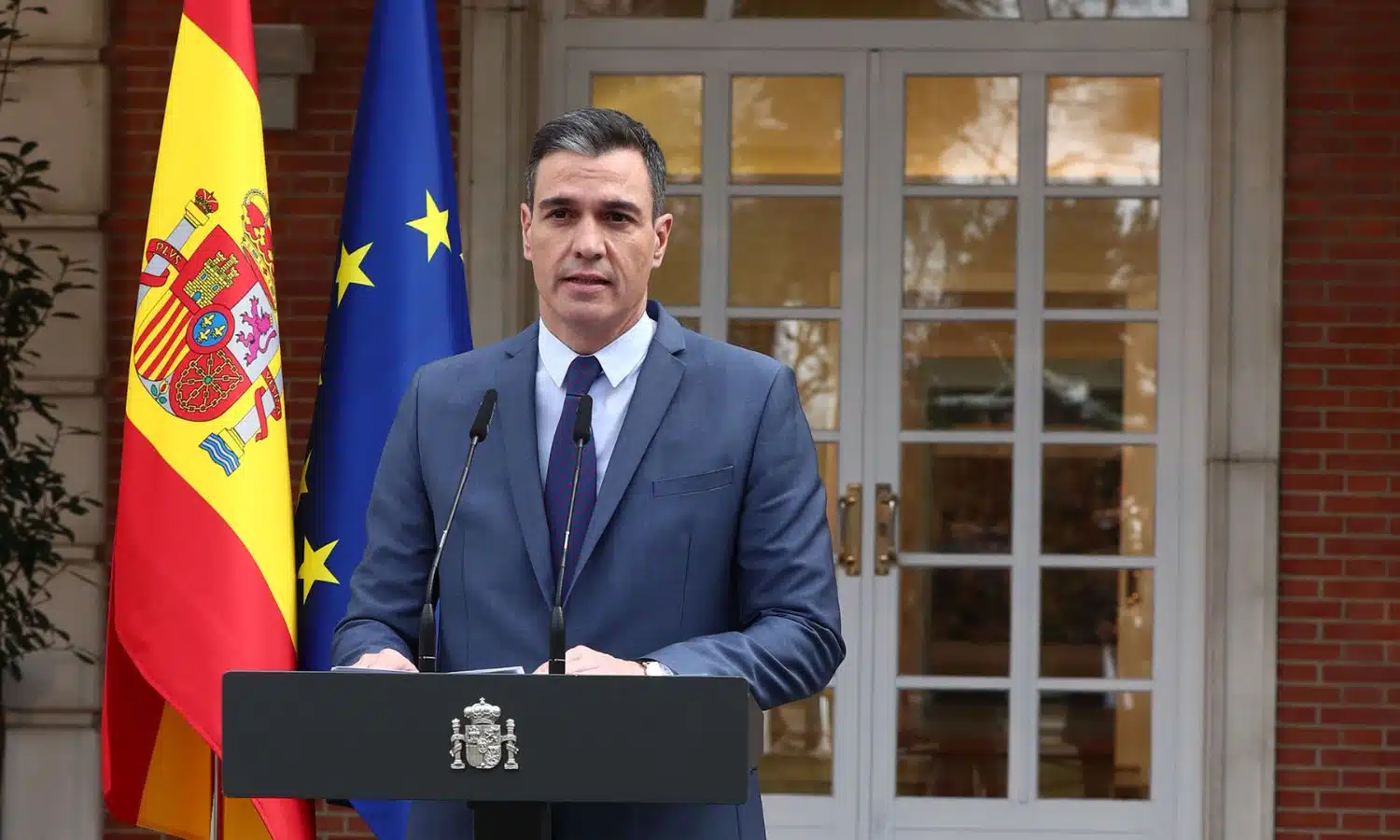
The crisis began during a press conference in which Sánchez addressed sanctions against Israel. In his statement, Sánchez remarked: “Spain, as you know, does not have nuclear bombs, aircraft carriers or large oil reserves. Alone, we cannot stop the Israeli attack. But this does not mean we will stop trying, since there are battles worth fighting for, even if their victory is not in our hands alone”. The comment was immediately seized upon by Israeli officials, who interpreted the reference to nuclear weapons as a dangerous allusion.
Israel’s Foreign Minister Gideon Saar responded sharply, accusing Sánchez of incitement. In a post on the social network X, Saar wrote: “A few days ago, Spain’s Prime Minister expressed regret that he does not have an atomic bomb ‘to stop Israel.’ Today he encouraged protesters to take to the streets. The pro-Palestinian mob heard the incitement messages and disrupted the ‘La Vuelta’ bicycle race. Thus a sporting event that was always a source of pride for Spain was canceled. Sánchez and his government – a disgrace to Spain!”.
The Movement to Combat Anti-Semitism (CAM), an international organization dedicated to fighting hatred against Jews, escalated the matter further. The organization issued an official call for Sánchez to be investigated under international legal conventions for alleged incitement to genocide. CAM’s CEO, Sacha Roytman, accused the Spanish leader of harboring genocidal intent.
“These disgusting and inciting statements brutally tore the mask from the face of Prime Minister Sánchez, who pretends to act from humanitarian motives, while his hidden desire appears to be a military attack on Israel, to the point of using weapons of mass destruction”, Roytman declared. He asserted that Sánchez had joined “the shameful club of those who yearn to use nuclear weapons against Israel”.
Roytman drew parallels to previous statements from other leaders who issued nuclear threats toward Israel. He cited Palestinian Authority official Jibril Rajoub, who once declared that “if we had nuclear weapons, we would use them”, as well as a former Iranian president who described Israel as “a one-bomb state”. According to Roytman, Sánchez’s words represented “nothing less than an aspiration for genocide, which will gladden a call to extremists throughout the region, who dream of Israel’s final destruction by any possible means”.
Roytman demanded that Sánchez “immediately renounce these murderous words, apologize unreservedly, and pray that his words will not arouse additional bloodshed”. He further urged international legal institutions “to examine whether there are grounds to accuse him of incitement to genocide” if no apology is forthcoming.
The accusations, if pursued, would place Spain’s prime minister in the unprecedented position of facing potential legal scrutiny under international law for alleged incitement to genocide. This possibility underscores the severity of the diplomatic fallout now unfolding between Madrid and Jerusalem.
Tensions between Spain and Israel have been steadily rising in recent years. Spain has been among Europe’s most vocal critics of Israeli policies, consistently supporting recognition of a Palestinian state and advancing calls for sanctions against Israel at the European level. While Madrid has sought to position itself as a moral advocate on behalf of Palestinians, Israel views Spain’s policies as part of a growing campaign of delegitimization.
Sánchez’s latest statement, in the eyes of Israeli officials, crossed a new line. While the Spanish leader may have intended to highlight Spain’s limited ability to influence events due to its lack of heavy military assets, Israeli leaders interpreted the mention of nuclear weapons as an expression of regret at not being able to deploy them against Israel.
The fallout has extended beyond diplomacy into the realm of civil society and sports. According to Saar, Sánchez’s rhetoric emboldened pro-Palestinian demonstrators to disrupt the prestigious “La Vuelta” bicycle race, leading to its cancellation. For Israel, this is presented as a tangible example of how extreme political rhetoric can inspire disruptive or even violent acts.
The episode now leaves both countries navigating a deeply complicated diplomatic landscape. As a European Union and NATO member, Spain plays an influential role in shaping regional policy toward Israel. Meanwhile, Israel, already facing increasing criticism from some of its European partners, must now contend with one of its most pointed disputes in recent memory with a Western government.
Whether Sánchez’s statement rises to the level of incitement to genocide, as Israel and CAM contend, or whether it has been misinterpreted and blown out of proportion, remains a matter of dispute. For the moment, the controversy has been elevated to the international stage, with legal institutions being urged to consider the matter.
The unfolding crisis highlights broader issues about the boundaries of political rhetoric in international affairs. It also raises pressing questions about the impact of inflammatory language, the responsibility of leaders to weigh the consequences of their words, and the potential for political discourse to ignite unrest on the ground.