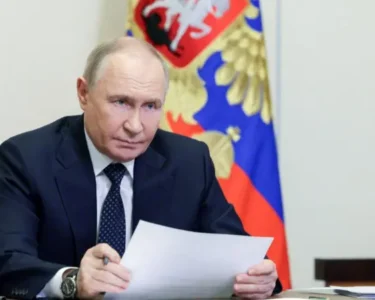

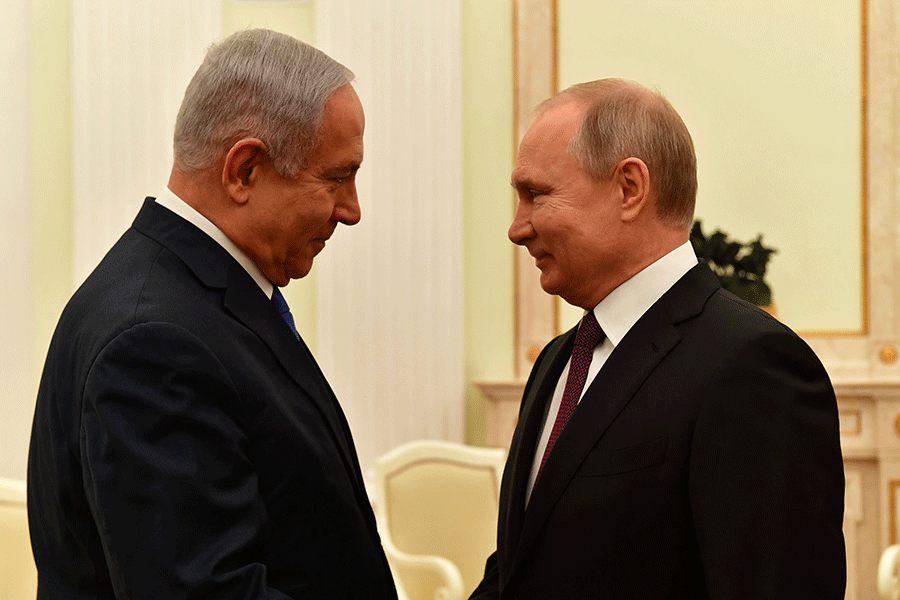
Prime Minister Benjamin Netanyahu spoke by phone this evening with Russian President Vladimir Putin, marking the second conversation between the two leaders in just six weeks. The call comes as both men face arrest warrants from the International Criminal Court in The Hague – Putin for alleged war crimes in Ukraine, Netanyahu for alleged crimes in Gaza, creating an extraordinary diplomatic tableau of two internationally wanted leaders conducting business as usual.
The conversation, initiated by the Russian side according to the Prime Minister’s Office, highlighted a stark contrast in how the two governments chose to characterize the discussion. Netanyahu’s office released an extremely brief statement that avoided substantive details: “Prime Minister Benjamin Netanyahu spoke this evening with Russian President Vladimir Putin. The call took place at President Putin’s initiative and in continuation of a series of previous conversations in recent times, which dealt with regional issues”.
The Kremlin, however, provided a far more detailed account that revealed the true scope of their discussion. According to Moscow’s version, “Vladimir Putin held a phone call with Israeli Prime Minister Benjamin Netanyahu. They held a detailed exchange of views on the situation in the Middle East, including developments in the Gaza Strip in the context of the ceasefire agreement and prisoner exchange, the situation around Iran’s nuclear program, and issues of promoting further stabilization in Syria”.
These topics represent some of the most sensitive strategic concerns for Israel, discussed with a leader whose government actively supports organizations Israel considers terrorist groups and has officially recognized a Palestinian state. The conversation takes place against a backdrop of near-total diplomatic collapse between the two nations following the events of October 7th.
Relations between Israel and Russia have deteriorated dramatically since that date. Putin and the Russian government openly supported Hamas following the massacre that triggered the current conflict, and both Hamas and Hezbollah are now considered completely legitimate organizations on Russian territory. Russia has gone further, declaring its recognition of the State of Palestine and even opening a Russian embassy to represent relations with the Palestinian state. Moscow refuses to recognize Jerusalem as Israel’s capital, instead designating Tel Aviv as the capital city in its diplomatic framework.
Given this hostile diplomatic posture, the ongoing dialogue between Netanyahu and Putin points to compelling strategic calculations that transcend the bilateral relationship. Both leaders appear to share a common interest in the Syrian arena – specifically, in preventing or reducing the expanding influence of Turkey, which has positioned itself close to Syria’s new governing regime.
For Israel, Turkey’s strengthening grip in Syria represents a potential threat to its northern borders and regional security architecture. For Russia, Turkey emerges as a regional rival capable of undermining Russian interests and influence in Syria, where Moscow has maintained a significant military presence and strategic investments for years. This convergence of interests appears sufficient to maintain channels of communication despite the broader diplomatic rupture.
The conversation also serves a critical intelligence and strategic purpose for Israel beyond Syria. Israeli officials are seeking to determine whether Russia intends to assist Iran in restoring its air defense capabilities following the twelve-day military confrontation, or whether Moscow might provide support in the nuclear sphere. The answers to these questions could prove decisive for Israel’s strategic planning and potential military decisions in the Middle East.
Yet the meeting of these two leaders raises uncomfortable questions that extend beyond tactical considerations. Why does the Israeli Prime Minister – himself operating under an arrest warrant from the International Criminal Court – maintain ongoing dialogue with a leader who faces similar charges from the same tribunal, and whose government actively supports Israel’s sworn enemies? Why do these conversations continue despite Russia’s recognition of a Palestinian state, its refusal to acknowledge Jerusalem as Israel’s capital, and its open support for organizations Israel designates as terrorist groups?
The answer appears to lie in the unforgiving calculus of international politics, where national interests and strategic necessities override ethical considerations and diplomatic niceties. In the complex landscape of Middle Eastern geopolitics, where threats multiply and alliances shift, even the most contradictory partnerships can serve essential purposes. The conversations between Netanyahu and Putin continue, despite everything, a testament to the cold pragmatism that governs relations between states when fundamental interests are at stake.
The two ICC-wanted leaders, each facing international legal accountability for alleged war crimes, have found common ground in the pursuit of their nations’ strategic objectives, demonstrating that in international affairs, necessity often trumps principle.