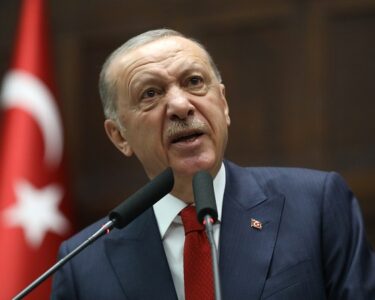

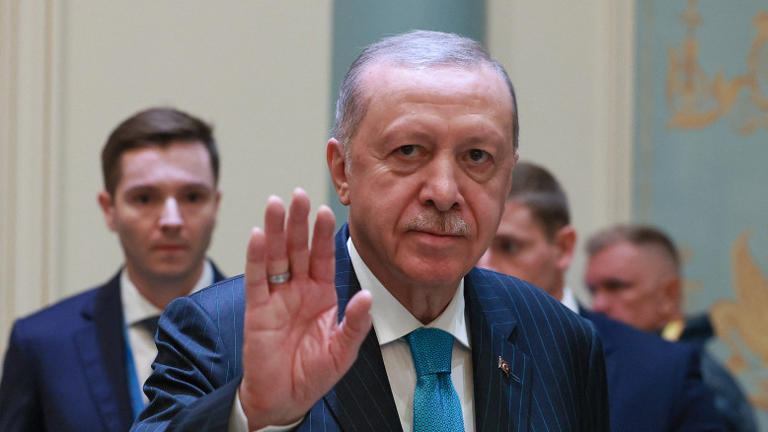
Turkish President Recep Tayyip Erdogan announced Sunday that Ankara is seriously considering deploying military forces to Gaza as part of an international stabilization force, a move that could dramatically reshape the regional security landscape and place Turkish troops in close proximity to Israel, a country the Turkish leader has repeatedly accused of genocide.
Speaking at a press conference on the sidelines of the G20 summit in Johannesburg, Erdogan said Turkey is examining how to deploy its forces in the Gaza Strip. “We will decide after we finish the discussions”, the president stated, leaving the international community to grapple with the implications of such a deployment.
The announcement comes as Turkey, the only Muslim-majority NATO member state in the Middle East, capitalizes on its central role in negotiating the recent Gaza ceasefire. Ankara was among the nations that signed the agreement in Egypt, committing not only to monitor its implementation but also to participate in the stabilization force being established in the territory. Now, as that agreement moves from paper to reality, Erdogan is positioning Turkey for a physical military presence at the epicenter of the Israeli-Palestinian conflict.
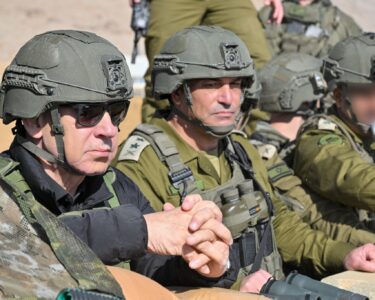
The potential deployment presents a significant challenge for Israel. Relations between Jerusalem and Ankara, once characterized by strategic cooperation, have deteriorated sharply in recent years. Erdogan has emerged as one of Israel’s most vocal international critics, and the Gaza ceasefire now provides him with an opportunity to translate rhetoric into tangible presence on the ground. The prospect of Turkish military forces operating in Gaza raises complex questions about how such a deployment would function given the hostile rhetoric that has defined Turkish-Israeli relations.
According to Reuters, Turkey positioned itself as a key mediator throughout the complex negotiations that produced the ceasefire agreement. This diplomatic investment has now yielded substantial political capital, which Ankara appears prepared to leverage for strategic gain. For Erdogan, who has long promoted a Neo-Ottoman vision of Turkey as a resurgent regional power, Gaza represents a strategic gateway. Successfully deploying Turkish soldiers to the Strip under international auspices would mark a significant achievement: direct military presence at the Middle East’s most volatile flashpoint, something Turkey has not accomplished in decades.
But Erdogan’s ambitions extend beyond the Levant. The Turkish president announced he will speak by phone with Russian President Vladimir Putin on Monday to discuss reviving the collapsed Black Sea grain agreement. This comes shortly after Erdogan hosted Ukrainian President Volodymyr Zelensky, demonstrating Ankara’s determination to position itself as an indispensable mediator in multiple crisis zones simultaneously. Despite previous failed attempts to salvage the grain deal, Erdogan told reporters he will work with Putin to renew the agreement that once allowed Ukrainian agricultural exports to reach global markets.
The dual diplomatic offensive reveals Turkey’s broader strategic calculus: securing a seat at every significant regional and international negotiation. Ankara exploits a unique geopolitical position—a NATO member that maintains close ties with Moscow while claiming to speak for the Muslim world—to make itself indispensable across multiple theaters. This approach represents power-based diplomacy, leveraging Turkey’s ability to bridge otherwise incompatible parties rather than advancing any particular set of values.
The immediate question confronting policymakers is what happens when Ankara makes its final decision on Gaza deployment. If Turkey commits forces to the Strip, it would establish an unprecedented situation: the first deployment of military personnel from a Muslim NATO state at the heart of the Israeli-Palestinian conflict in decades. The ramifications would extend far beyond Gaza itself, potentially reshaping regional security arrangements and power dynamics that have remained relatively stable for generations.
Erdogan appears fully aware of the stakes involved. His simultaneous engagement on the Gaza and Ukraine files suggests a deliberate strategy to demonstrate that Turkey has returned as a major player on the world stage. The Turkish president is no longer simply expressing interest in regional affairs from the sidelines but actively maneuvering to establish facts on the ground in multiple theaters.
The international community now watches to see whether Erdogan’s announcement represents genuine intent or strategic posturing. For Israel, the prospect of Turkish troops in Gaza presents a complex challenge with no clear diplomatic solution. For Turkey, successful deployment would validate years of assertive foreign policy and cement Ankara’s status as a regional power broker. The decision, when it comes, will carry consequences far beyond the Gaza Strip itself.